
How to Heal a New Tattoo: A Complete Aftercare Routine Guide from Day 1 to Day 14
Feeling a slight stinging sensation while washing your tattoo? Noticing redness, dryness, itchiness, or early peeling?
These symptoms are actually pretty common in the first few days of tattoo healing.
Some redness, plasma leakage, and sensitivity are completely normal early on. But excessive dryness, irritation, uneven peeling, or fading are often caused by improper aftercare rather than the tattoo itself.
Common mistakes include:
- over-cleansing or washing too aggressively
- using harsh or scented soaps
- drying with an unclean towel
- over-moisturizing or using unsuitable aftercare products
A proper tattoo aftercare routine helps protect the tattoo, support skin recovery, and improve the final healed result.
So how do we properly heal a new tattoo?
Here’s a simple PEPAX day-by-day tattoo healing
guide from the moment your tattoo is completed to the first 14 days of recovery.
Day 0: Complete Your Tattoo & Protect Fresh Skin
Immediately after finishing a tattoo, the skin enters the earliest healing stage.
Common signs include:
- redness
- mild swelling
- plasma leakage
- warmth around the tattoo
At this moment, the main goal is:
Clean the tattoo, calm the skin, and create a protective barrier.
Step 1: Gentle Cleaning After Tattoo Completion
After the tattoo session, artists usually clean the tattooed area to remove:
- Excess ink
- Blood
- Plasma residue
- Surface impurities
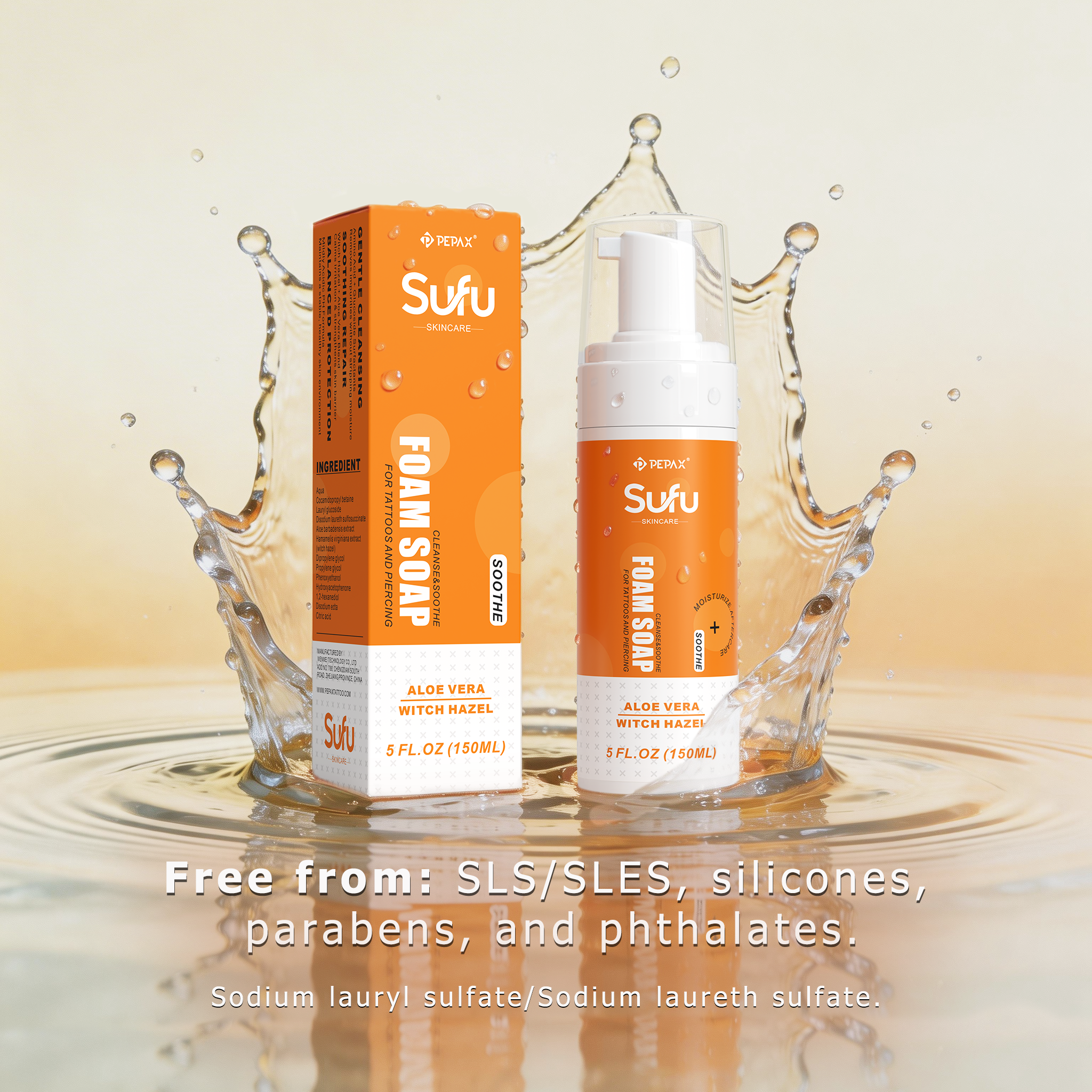
A gentle foam soap cleanser can help clean the skin without unnecessary friction.
Compared with traditional soaps, PEPAX SUFU Foam Soap provides:
- Gentle cleansing
- Reduced friction on sensitive skin
- Comfortable cleaning experience
- Support for the skin barrier

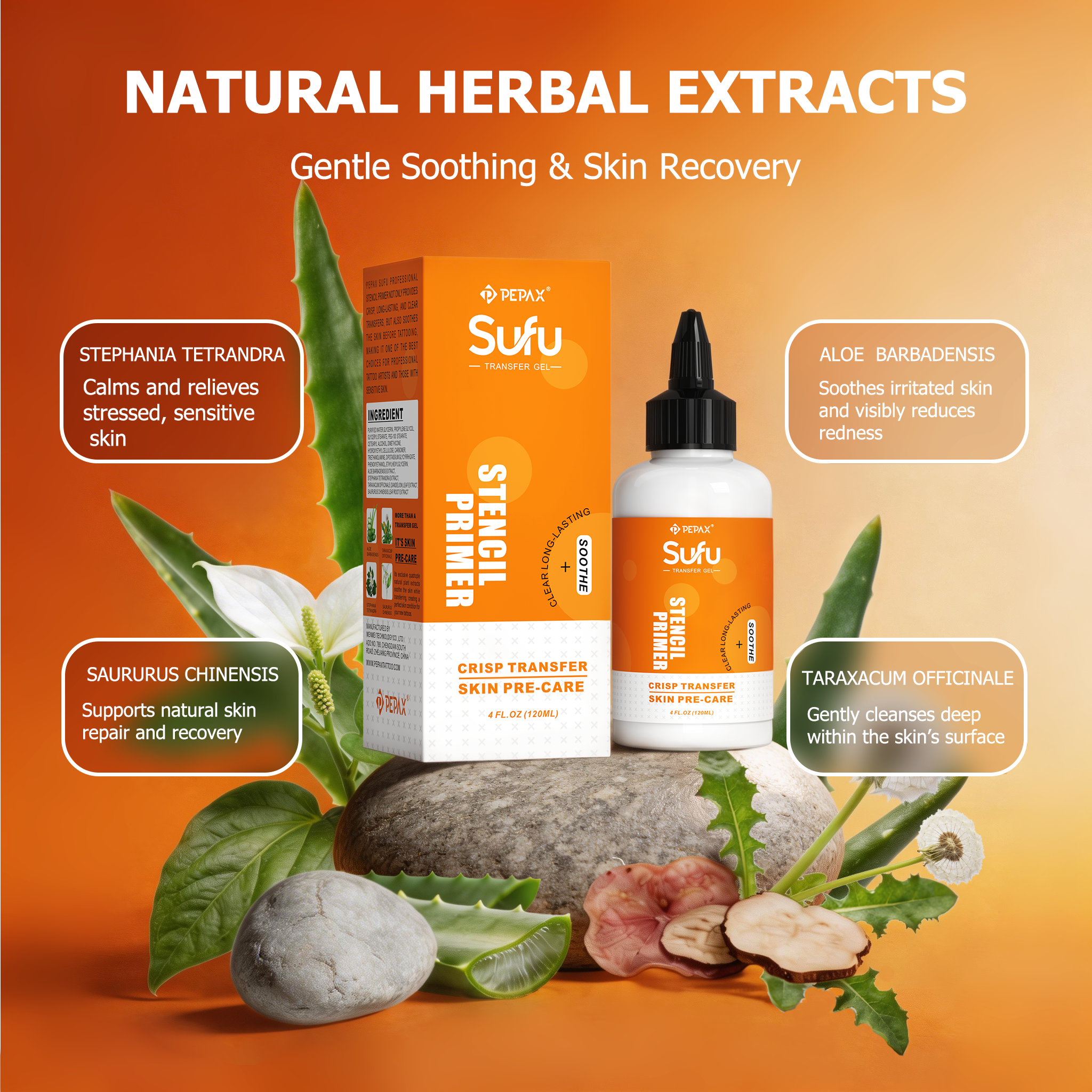
Step 2: Apply Tattoo Soothe Gel Before Protection Film
After cleaning, many professional artists apply a layer of tattoo soothe gel before using protection film.
This step is especially common when:
- Preparing the final tattoo photos/videos
- Providing immediate skin comfort
- Creating a smoother surface before applying film
PEPAX SUFU Soothe Gel helps:
- Calm freshly tattooed skin
- Reduce feelings of dryness and tightness
- Provide lightweight hydration
- Improve comfort immediately after tattooing

Step 3: Apply Protection Film
After the skin has been cleaned and prepared, now we use protection film.
Fresh tattoos are vulnerable because the skin barrier is temporarily damaged.
PEPAX SUFU Protection Film helps:
- Shield the tattoo from dust and bacteria
- Reduce friction from clothing
- Prevent accidental touching
- Maintain a moist healing environment
Compared with regular plastic wrap, PEPAX SUFU Protection Films are usually:
- More breathable
- More flexible
- Better suited for longer wear

Depending on the amount of plasma buildup and the artist’s recommendation, the first film may need to be replaced after 6 hours, if excessive plasma buildup and fluid accumulation occur, consider changing the protective film sooner.
PEPAX SUFU Protection Film is available in different sizes, including:
- 10cm × 10m
- 15cm × 10m
- 15cm × 10cm (small pack)
Different sizes allow artists to choose suitable coverage for both small and large tattoo areas. A combination of different films sizes also also offers more flexibility for artists working on both large and small tattoos.
Learn more about protection film : The Secret Weapon for Tattoo Aftercare

Day 1–5: Protection & Gentle Cleansing
During the first few days, the tattoo continues the inflammatory healing stage.
The tattoo may experience:
- Plasma leakage
- Mild redness
- Slight swelling
- Warmth
During this stage, protection is still the priority.
Continue Using Protection Film
Most professional tattoo films are worn for around 3–5 days , depending on:
- Tattoo size
- Tattoo location
- Amount of fluid leakage
- Artist recommendation
During this time, we should avoid:
- Removing the film too early
- Touching the tattoo unnecessarily
- Exposing it to dirty environments
After Removing Protection Film (Around Day 3–5): Start Healing Care
Once the protection film is removed, the tattoo enters the active recovery stage.
The skin may begin showing:
- Dryness
- Tightness
- Itching
- Light peeling
At this stage, keeping the tattoo clean and hydrated becomes important.
Clean with Gentle Foam Soap
After removing the film:
- Wash hands thoroughly
- Rinse tattoo with lukewarm water
- Apply tattoo foam soap cleanser
- Gently clean with fingertips
- Rinse completely
- Pat dry with a clean towel or paper towel
Avoid rubbing, scrubbing, or over-washing.
Freshly healed skin is still delicate and can easily become irritated.
Day 4–10: Repair Dryness & Support Skin Recovery
This is usually when healing starts feeling the most uncomfortable. It’s also the key stage for tattoo peeling care.
Common symptoms:
- dryness
- itching
- tightness
- flaking
- peeling
Many people accidentally interfere with healing here by:
- scratching peeling skin
- Removing flakes manually
- over-washing
- over-moisturizing
The goal now is less about protection and more about balance. — Keep skin clean, moisturized, and comfortable.
Tattoo Butter: The Main Healing Product
After removing protection film, a tattoo butter can be introduced.
Unlike lightweight gels used immediately after tattooing, PEPAX Tattoo Butter is designed for the longer healing process.
It helps:
- Reduce dryness
- Support skin barrier recovery
- Prevent excessive cracking
- Improve comfort during peeling
Note: A thin layer is enough. Over-applying heavy occlusives is not recommended during active healing, as it may trap excess moisture and affect skin recovery.

Day 10–14+: Long-Term Tattoo Maintenance
By this stage:
- Most peeling has finished
- Skin texture becomes smoother
- Redness is reduced
Although the tattoo looks healed externally, deeper skin recovery continues.
Now the focus changes from repair to maintenance.
Tattoo Lotion: Daily Hydration & Tattoo Care
Tattoo lotion is ideal when the skin has recovered enough for regular moisturizing.
Compared with repair balm:
- Lighter texture
- Easier daily application
- Suitable for long-term use
PEPAX SUFU Tattoo Lotion helps:
- Keep skin soft
- Maintain tattoo appearance
- Prevent dryness
- Support long-term color vibrancy
A consistent moisturizing routine helps tattoos stay healthier-looking over time.

Related reading: How to Prevent Tattoo Fading
Common Tattoo Healing Mistakes to Avoid
❌ Using harsh or scented soap
❌ Scrubbing fresh tattoos
❌ Over-cleansing
❌ Applying too much butter
❌ Picking peeling skin
❌ Removing protection film too early
❌ Using unsuitable skincare products
Small mistakes during healing often lead to bigger issues later.
Final Thoughts
A successful tattoo healing process is not complicated.
It follows a simple routine:
Clean
Use a gentle tattoo foam soap when the tattoo is done and after removing protection film.
Soothe
Apply soothe gel immediately after tattoo completion to comfort freshly tattooed skin.
Protect
Use professional protection film immediately after tattoo completion.
Repair
Use tattoo repair balm or balm stick during the peeling and recovery stage.
Hydrate:
Use tattoo lotion for long-term hydration and tattoo care.
Tattoo healing is a process. Keep it clean, gentle, and consistent — and your tattoo will have the best chance to heal beautifully.
Explore PEPAX Tattoo Aftercare Products collection and build your complete tattoo care routine with PEPAX.